
Author: Amy

  • Threads of Grace in Relationships

    Threads of Grace in Relationships

    In the Korean war, thousands of US soldiers were captured and detained in North Korea POW camps.  These camps were unique in military history.  Soldiers in them had adequate food, water and shelter.   They weren’t tortured or even held in captivity by barbed wire and armed guards.  But they had an astounding death rate—38% of the prisoners died.  More than half of those died from what the soldiers themselves called “give-up-itis.”

    Men would simply walk into their hut, sit down in a corner, pull a blanket over their head, and be dead within two days. There was no medical reason for their deaths. They just… gave up.

    How did this happen?

    The army psychiatrist who studied this afterward called it “the ultimate weapon”—systematic isolation and discouragement.  The North Koreans did four things:

    1. They encouraged distrust by rewarding even trivial informants with cigarettes.
    2. They eroded caring and goodwill by regularly forcing soldiers to confess in front of their peers every infraction, character flaw and weakness.
    3. They destroyed respect for leadership by using the leaders to erratically enforce meaningless and arbitrary rules.
    4. They flooded them with negative emotions by withholding all positive outside correspondence and delivering every negative one immediately—notices of deaths, divorces, overdue bills.

    The Koreans understood something we often forget: isolation and discouragement can kill. They systematically destroyed what kept those men alive—community, hope, and caring relationships.


    Hebrews 10:24-25

    God, of course, understands this too. That’s why the writer of Hebrews doesn’t suggest encouragement as a nice option—he pleads with the readers to encourage each other – it’s essential to our survival and flourishing.

    ‘And let us consider how we may spur one another on toward love and good deeds, not giving up meeting together, as some are in the habit of doing, but encouraging one another—and all the more as you see the Day approaching.’ Hebrews 10:24-25

    Let’s be Intentional

    Notice how the verse begins: ‘Let us consider’—give thoughtful attention to this. North Korea gave careful consideration to how to discourage and kill soldiers without lifting a finger against them.  The opposite of those POW camps isn’t accidental kindness or random encouragement. It’s intentional, strategic, thoughtful care for one another.

    Let’s do what the verse says—let’s consider together: How do we actually spur one another on?

    How Encouragement Works

    Encouragement is the process of providing the support and motivation which “gives courage” to overcome obstacles or achieve goals.  Psychologists have identified three types of motivation which help us understand how to spur each other on. They are: intrinsic, social, and goal-oriented motivation.   

    Intrinsic motivation: I am motivated by my ideals and values.
    For example: I journal because it helps me process my thoughts and feelings, and I value my sanity.

    Social motivation: I’m motivated by those around me—their examples, their presence, their care.
    For example: I wanted to mature when I saw my mother start to grow spiritually when I was in my teens.

    Goal-oriented motivation: I’m motivated by thinking about the future I desire.
    For example: I gave my kids a ‘compassion sibling’ as a tenth birthday present in order to give them practice caring for others.

    God designed us to respond to all three types of motivation, and appeals to all three when He tells us to spur one another on.

    Love and Good Deeds

    First He tells us what direction to spur one another on: ‘toward love and good deeds’.  These ideals appeal to our intrinsic motivation.  They are in themselves worthy of pursuit, because they align with who God created us to be.

    How can I pursue these ideals?

    • I can be committed to growing. When I am committed to becoming whole and healthy, I am pursuing love and doing good for both myself and others.  When I don’t deal with my issues, that distorts my ability to love others and do good, which affects everyone around me.
    • I can be careful about my environment. The music and podcasts I listen to, the shows I watch, the books I read, the conversations I have—these influence me and those around me.
    • I can guard and cultivate my attitude.  This is a big one for me lately.  If I get out of the habit of thanking God for little things, or stop working out consistently, let myself eat too much sugar or don’t get enough sleep, or any host of other good practices, I lose a pleasant disposition pretty quickly!  A bad attitude is decidedly not spurring myself nor anyone else toward love and good deeds.

    But we’re not meant to pursue love and good deeds in isolation. The next part of the verse addresses how we do this—together. 

    Doing it Together

    The verse encourages us to ‘not give up meeting together’—appealing to our social motivation.  We need each other for community, support and even correction.

    The prisoners died when they were isolated and discouraged. God wired us for community—it’s not optional, it’s essential.

    How does meeting together spur us on?

    • Following and setting positive examples.  Being around people who are growing spiritually motivates me to take my spiritual walk seriously too.  As an adult, I have found it very helpful to seek out mentors as well as younger women to mentor—it helps me become the person God wants me to be. 
    • Doing it together. Mutual encouragement is powerful.  I see this everywhere.  I like to be part of groups that study the Bible together.  My family has built a ministry of serving missionaries and ministries together with others—serving together toward a common goal is now my favorite way to develop friendships. 
    • Remembering God sees and cares. Matthew 6:1-4 says that God rewards the good we do in secret. When my kids were little, I used to count and report to God the number of diapers I changed at the end of each day.  I needed to remind myself that even mundane things matter to Him.
    • Being mindful of God’s presence. Philippians 4:5 reminds us ‘Let your gentleness be known to all, for The Lord is near.’  I often catch myself with the reminder to be gentle with my husband or kids, because God really is right here, watching how I treat them.

    Looking to the Future

    This passage ends with goal-oriented motivation, saying ‘and all the more as you see the Day approaching’. The writer wants us to think about the future we’re building.

    ‘The Day’ is probably referring to the Day of the Lord—where we’ll be rewarded for our lives as believers.  I want to be able to stand victoriously before Christ, having encouraged others and myself to follow Him well.  I want us all to hear ‘well done, good and faithful servant’.

    Thinking of the future we’re building also applies to every aspect of life—parenting and marriage, and all relationships.  What does it look like to sow seeds for ten years from now?

    • Parenting for tomorrow’s teen.  When I’m with a young child and I’m not sure how to deal with a situation (or I’m tempted to parent from irritation or exhaustion), I need to think How I handle this sets the pattern for the next 10 years, so what outcome am I building?”, and choose the action based on the result I want, who I want the child to become, and what I want that relationship to look like.
    • Planting marriage seeds.  We often save our best behavior for guests and outsiders, but our family needs it to.  My husband Chester models this brilliantly; I’m still learning.  I vividly recall God reminding me: He cares how I treat my husband even when I’m angry. How I treat those closest to me is sowing seeds for future fruit.
    • Cultivating relationships.  What kind of church do I want to be a part of?  What kind of friendships do I want to have?  Tomorrow’s results (and results ten years from now) start with how well I encourage those around me today.

    Putting it into Action

    The verse gives us our instruction: ‘but encouraging one another.‘  Our motivations—intrinsic values, social connection, and goals—explain why encouragement works, but how do we encourage effectively?  This is also worth considering, because the same encouragement is felt and understood differently by each person.

    Gary Chapman shared five love languages, which I have found useful as I think about encouragement.  Last week at the Free Grace International Women’s retreat in Tennessee, all of these “languages” were used, so I’ll use these as my examples.

    1. Words — These were meaningful, spoken affirmations on wonderful food, devotionals and testimonies.  The women did this so well!
    2. Gifts — The welcome bags of useful and wonderful gifts were amazing – from dark chocolate to ear plugs, a journal and a good quality pen.  I loved these!
    3. Time — We gave our full attention.  People weren’t together but on their phones.  Instead, phones were set aside (often lost), and we were present with each other.  Even during unscheduled time, people chose to focus on conversations with each other instead of distractions.  It was beautiful!
    4. Service — Sarah planned the meals and led the cooking, but several people helped.  Even more people cleaned up, kept the house clean, and shoveled snow for hours so we could all leave safely.
    5. Physical Touch — Finally, we hugged and came around each other in our hurts and in our sharing.  It was meaningful and God-honoring.

    Paying attention to others’ love languages is part of considering how to spur them on.


    Conclusion

    Many prisoners in the Korean war died because they were systematically isolated and discouraged. But we have the opposite calling in this passage—to connect and encourage with intentional, strategic and thoughtful care.

    With every word of affirmation, moment spent with someone who needs you, or burden that you carry, you’re literally making a life or death difference.  You’re weaving “Threads of Grace” that strengthen and hold people together with connections that breathe life.


  • Where we meet God: The Places of Psalm 23

    Where we meet God: The Places of Psalm 23

    At a recent retreat, we were asked a simple question: What is your favorite place, and why?

    I thought immediately of the beach of the Mediterranean. I can sit there for hours, watching the waves roll in and retreat, roll in and retreat. The rhythm is hypnotic, cleansing. The waves gently wash over the shore, and somehow they wash my cares and worries away too. They clear my mind. They cleanse my soul.

    It made me realize: time with my Shepherd does the same thing.

    This question—about favorite places—sent me back to Psalm 23 with fresh eyes. Because this psalm isn’t just about a shepherd and sheep. It’s about a journey through places, each one revealing something about God’s care and our spiritual needs.

    The Geography of the Soul

    Psalm 23 names six distinct places:

    • Green pastures
    • Quiet waters
    • Paths of righteousness
    • The valley of the shadow of death
    • A table in the presence of enemies
    • The house of the Lord

    Each location serves a purpose. Each one meets a need. Through this Psalm, we’re invited to the places where God meets our own needs.

    Green Pastures: Nourishment and Rest

    “He makes me lie down in green pastures.”

    In the desert wilderness where David shepherded, green pastures weren’t common. A shepherd had to seek them out, know where to find them, sometimes create them. These were places of abundance in the midst of scarcity.

    What is the purpose of green pastures? Nourishment, yes. But also notice: He makes me lie down there. This is also a place of rest.  And it’s not optional – he doesn’t advise me to lie down there, he makes me lie down.

    Where do you find nourishment? Not just physical food, but what feeds your soul? I tend to get so focused on productivity, on doing and serving, that I forget I need to lie down in green pastures. Do you do that too? The shepherd knows this about his sheep, and sometimes He has to make them rest, whether they want to or not. He knows what we need better than we do.

    Quiet Waters: Where Thirst Is Quenched

    “He leads me beside quiet waters.”

    Sheep are afraid of rushing water—they can’t swim, and the sound frightens them. So shepherds would sometimes build small dams to create pools of still water where sheep could drink safely.

    Think about that. The shepherd goes to extra effort to prepare the right place for his sheep. He doesn’t just point them toward any water source. He finds or creates quiet waters.

    For me, on the Mediterranean beach, the waves aren’t quiet in the sense of silence, but there’s a quietness to the rhythm, a peace.  In the same way, time with my Shepherd restores something in me that I didn’t even know was depleted. He invites me to drink deeply.  He restores my soul.

    Paths of Righteousness: The Journey Itself

    “He leads me in paths of righteousness for his name’s sake.”

    This isn’t a destination—it’s the way itself. The journey. The daily walk. God is with us on them, leading us in normal daily life and through each of the places He takes us.

    And isn’t it interesting: these paths are for his name’s sake. It’s His glory, His reputation that’s on the line. We can trust God to lead us on the right paths.

    Of course, we as sheep love to veer off the path. Isaiah 53:6 says “all we like sheep have gone astray.” Like the hymn says, I too am “prone to wander.” But here’s the comfort: He’s a good shepherd, and good shepherds lead their sheep on paths of righteousness. This Psalm also mentions that He keeps us on this path too—His rod and staff correcting us as needed, bringing us back when we wander off.

    The Valley of the Shadow of Death: The Scary Place

    “Even though I walk through the valley of the shadow of death, I will fear no evil, for you are with me.”

    Sheep are scared in shadows—they can’t see well enough to know where they’re going, and danger could be lurking anywhere. We’re the same. We can’t see the future, and we’re constantly facing dangers. Mark Twain famously said: “I’ve suffered many troubles in my life, most of which have never happened.” Even our imagined dangers feel real in the shadows.

    We all find ourselves in valleys at times. We all walk through shadows. We all face death in its various forms—loss, grief, uncertainty, danger.

    But notice: the promise isn’t that we’ll avoid the valley. It’s that He’ll be with us in it. The comfort isn’t in the absence of the valley but in the presence of the Shepherd. He’s still leading us from the previous phrase. Even if we don’t see where we’re going, we can hear His voice (John 10:27). He is with us, leading us and comforting us.

    God Himself wants to be our comfort.

    A Table in the Presence of Enemies: The Unexpected Feast

    “You prepare a table before me in the presence of my enemies.”

    This location puzzles me. Not a peaceful meadow or a safe sheepfold, but a place where enemies are present. And yet, there’s a feast. I don’t fully understand it yet, but I find comfort in this: God doesn’t wait until all opposition is removed to provide for you. He sets a table in the midst of conflict, in the face of those who wish you harm. He declares His care for you publicly, abundantly, even when circumstances suggest you should be afraid or lacking.

    The House of the Lord: Home Forever

    “I shall dwell in the house of the Lord forever.”

    All of these destinations are special because God is with us in them. He found the green pastures and made the quiet waters. He leads us on the path and stays with us always. He gives us the individual attention we need. But here at the end of the Psalm is another destination—this one isn’t part of the journey, but a forever home.

    We’re not just visiting God’s house, but dwelling there. Living there. Being at home there.

    What does it mean to dwell in the house of the Lord forever? To feel truly at home in the King’s house? To know you’re not a guest who might overstay their welcome, but a beloved child who belongs there?

    This is where the journey through all the other places leads: to being comfortable and at home in God’s house forever.

    Where God meets us

    These places in Psalm 23 aren’t just poetic images. They’re invitations to reflection. They ask us to map our own spiritual geography, to recognize when (and where) God nourishes us, how He quenches our thirst, what paths we’re walking, His presence through everything, the feasts he feeds us and how He Himself is our home.

    The Shepherd knows all these places. He prepares them, leads us to them, walks with us through them. And just as those Mediterranean waves wash over the shore again and again, cleansing and clearing, time with our Shepherd in each of these places washes over our souls, restoring us for the journey ahead.

    Where are you with your Shepherd today?  Trust Him. He knows the way, and He knows what you need.

  • The Shepherd’s Individual Care: Finding Yourself in Psalm 23

    The Shepherd’s Individual Care: Finding Yourself in Psalm 23

    I attended a women’s retreat several weeks ago, and the theme of the retreat was Psalm 23.  The retreat itself was refreshing, but especially so was the time both there and afterward spent pondering God’s word – specifically the Psalm that was the theme.

    I bet that you know the Psalm well.  I did.  And yet, the practice of really thinking about God’s word and digesting it makes it so much richer.  I’d like to share a few of my thought so far as I consider what God says through David in this Psalm.

    When I first started thinking through Psalm 23,  I naturally thought of it in collective terms. God is the shepherd of the whole flock, I reasoned. He makes the whole flock lie down in green pastures. He leads all of us beside quiet waters, guides all of us in paths of righteousness. After all, isn’t the church described as God’s flock? Doesn’t He care for all believers together?

    But then I noticed something that changed everything: the pronouns.

    Every Single Line

    Go back and read Psalm 23 slowly. Count the first-person singular references:

    The Lord is my shepherd. I shall not want.
    He makes me lie down in green pastures.
    He leads me beside quiet waters.
    He restores my soul.
    He leads me in paths of righteousness for his name’s sake.
    Even though I walk through the valley of the shadow of death,
    I will fear no evil, for you are with me;
    your rod and your staff, they comfort me.
    You prepare a table before me in the presence of my enemies;
    you anoint my head with oil;
    my cup overflows.
    Surely goodness and mercy shall follow me all the days of my life,
    and I shall dwell in the house of the Lord forever.

    Every single line. There’s not one verse that speaks in collective terms. David isn’t writing about God’s care for Israel as a nation, or even about His care for all believers through time. David is writing about God’s personal care for him.

    And it applies to me. To you. Individually.

    The Moment It Clicked

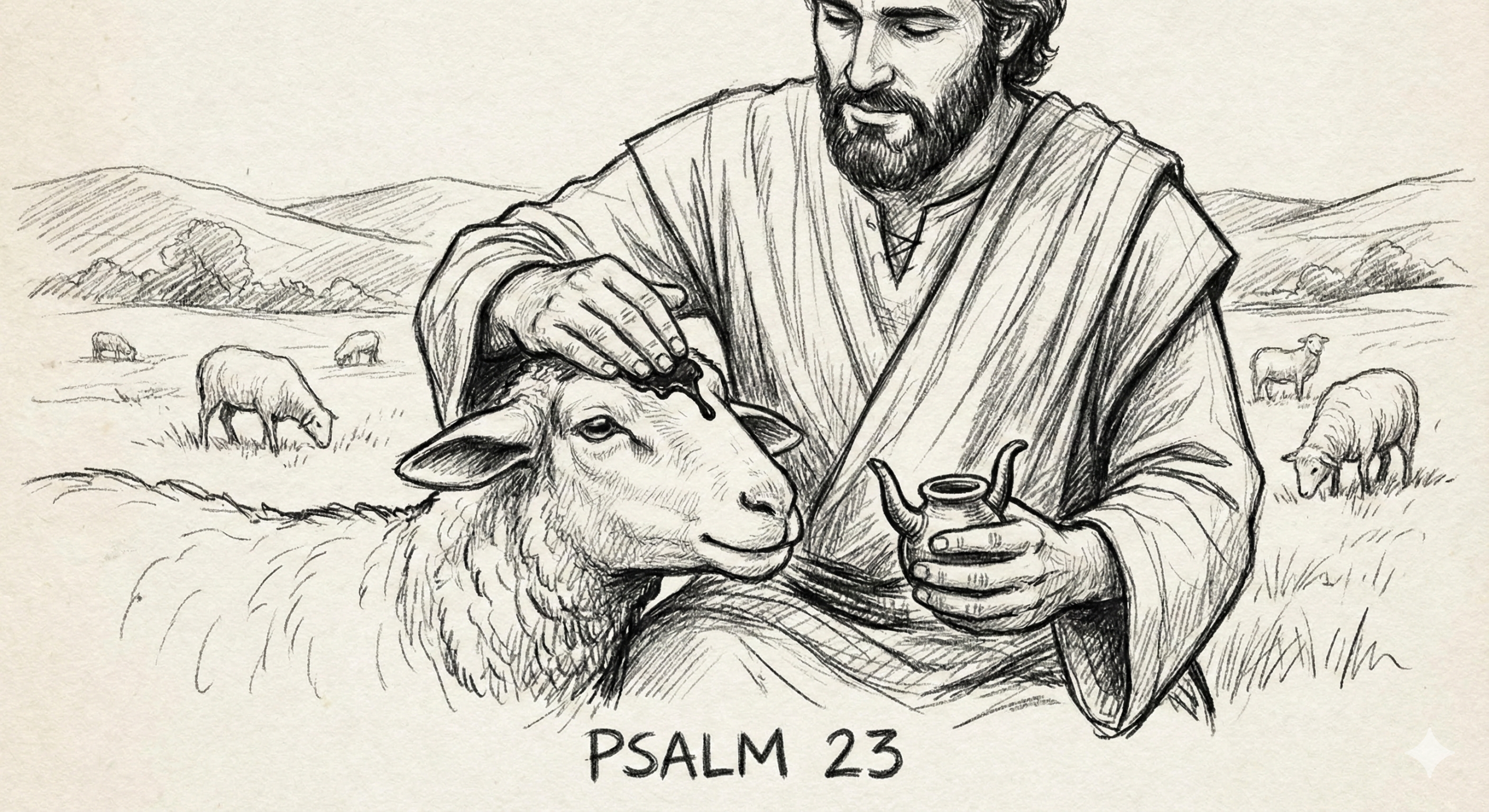
    The line that made this understanding crystallize for me was: “You anoint my head with oil.”

    This has to be a one-on-one activity. Picture it: A shepherd doesn’t hold all the sheep together and sprinkle oil over them from a distance. He takes each sheep individually, spends time with that particular animal, and carefully rubs oil into its head. Ancient shepherds did this to protect sheep from nasal flies, to heal skin irritations and infections, and to comfort them.

    This is intimate. This is personal. This requires the shepherd to notice what’s bothering this specific sheep and attend to it individually.

    That’s when it clicked: Jesus does this for me. Not just for us, en masse, as the church. He spends time with me as an individual. He takes the time to know my hurts, to know my worries, to notice what’s bothering me. He treats my specific wounds. He deals with my particular anxieties and comforts me as the unique person I am.

    This anointing—this one-on-one time with Jesus—is what results in the overflowing cup. When I experience God’s individual attention, when I know and feel that I matter to Him, that He would take time to personally notice and care for me, my cup overflows.

    What This Means

    God has this same level of individual care for you. Not just for humanity in general. Not just for your church or your small group. For you, specifically.

    Because He is your shepherd, He knows what you need.  He goes to the extra effort to find and prepare the right places for you to be nourished—like a shepherd building a dam for calm waters in the wilderness, or finding the green grassy places in the desert.  He helps you rest there – even if you don’t want rest.

    He restores your soul. He knows how to lead you a guide you on the right paths.. He is with you when you’re in scary situations—and when you’re not. He comforts you by helping you understand boundaries and stay away from dangers.

    He prepares a table for you, a feast, even in front of your enemies. He anoints your head with oil—He protects you, He soothes you, He gives you the Holy Spirit (which is sometimes referred to as oil) who comforts you. This oil keeps you from going crazy. This oil is His individual care of you.

    Because of Jesus, you have a future filled with goodness and mercy. You are always welcome in God’s home because of Jesus.  You’ll spend Eternity with Him.

    The Personal Psalm

    I relish God’s divine attention. I want to know and feel that I matter to Him. And the beautiful truth of Psalm 23 is that this isn’t wishful thinking or presumption. It’s exactly what David is declaring, and it’s exactly what Jesus demonstrates.

    This psalm is actually all about you. Not in a self-centered way, but in a deeply loved way. God’s care isn’t diluted by being shared among billions. His attention to you isn’t divided. You matter to Him as an individual, and He takes the time to care for you as such.

    That’s the kind of shepherd we have.

  • Even God’s Judgement is Gracious

    Even God’s Judgement is Gracious

    “For we must all appear before the judgment seat of Christ, so that each one may receive what is due for what he has done in the body, whether good or evil” (2 Corinthians 5:10 ESV).

    When we think about the judgment seat of Christ and the fact that God will evaluate what we’ve done, it’s easy to be filled with fear.  We, as believers, are often subject to attacks that make us keenly aware of our shortcomings. The accuser replays our history, convincing our minds to dwell on what we should have done differently. He provokes us to focus on ourselves and wallow in guilt and shame instead of keeping our eyes on Christ, the champion of our faith. When we lose our focus this way, we can become convinced that these shortcomings, flaws, and outright sins will be the subject of God’s evaluation of us.

    But this view of God—that He’s vengefully cataloging our failures, and will punish us in one way or another—is from the accuser, not from God. God understands the limitations of humanity. Psalm 103:14 says, “He remembers that we are dust.” He depicts Himself to us as a Good Father, delighting in us (Zephaniah 3:17) and giving good gifts to His children (Matthew 7:7-10).

    I’d like to encourage you with a few examples from Scripture that we don’t serve a God who capitalizes on our flaws and failures, but One who views us through the rose-colored lens of His lavish grace and love toward His children.  

    Hebrews 11 contains the famous “faith hall of fame.” Let’s recall a few of the characters mentioned in that chapter:

    Abraham protected himself instead of his wife, endangering her life by introducing her as his sister and allowing her to be taken into another man’s harem not only once, but twice (Genesis 12 and 20). God’s evaluation of Abraham: “When called to go to a place he would later receive as his inheritance, he obeyed and went, even though he did not know where he was going” (Hebrews 11:8).

    Sarah laughed when God said she’d have a son in her old age (Genesis 18:12—she was 90. I think I’d laugh too). God’s evaluation of Sarah: “She considered him faithful who had made the promise” (Hebrews 11:11).

    Rahab was known for being a prostitute (even in Hebrews 11:31). God’s evaluation of Rahab: “because she welcomed the spies, was not killed with those who were disobedient” (Hebrews 11:31)

    Gideon made God confirm over and over that He would defeat the enemy through him (make the fleece wet and the ground dry—now make the ground wet and the fleece dry) (Judges 6).

    Barak agreed to go to war only if the woman (Deborah) would go with him (Judges 4:8).

    Jephthah sacrificed his daughter after God gave him a victory over the enemy (Judges 9).

    David violated Bathsheba, then murdered her husband in an attempt to cover it up (2 Samuel 11).

    God’s evaluation of them (with others): “Through faith conquered kingdoms, administered justice, and gained what was promised.” (Hebrews 11:33). “The world was not worthy of them.” (Hebrews 11:38)

    Can the same be said of us?

    Will God think the world was unworthy of us (Hebrews 11:38), and not be ashamed to be called our God (Hebrews 11:16) – despite all of our (known and unknown) faults and sins?

    Is it possible that we could be not just saved but pleasing to God (Hebrews 11:5)?

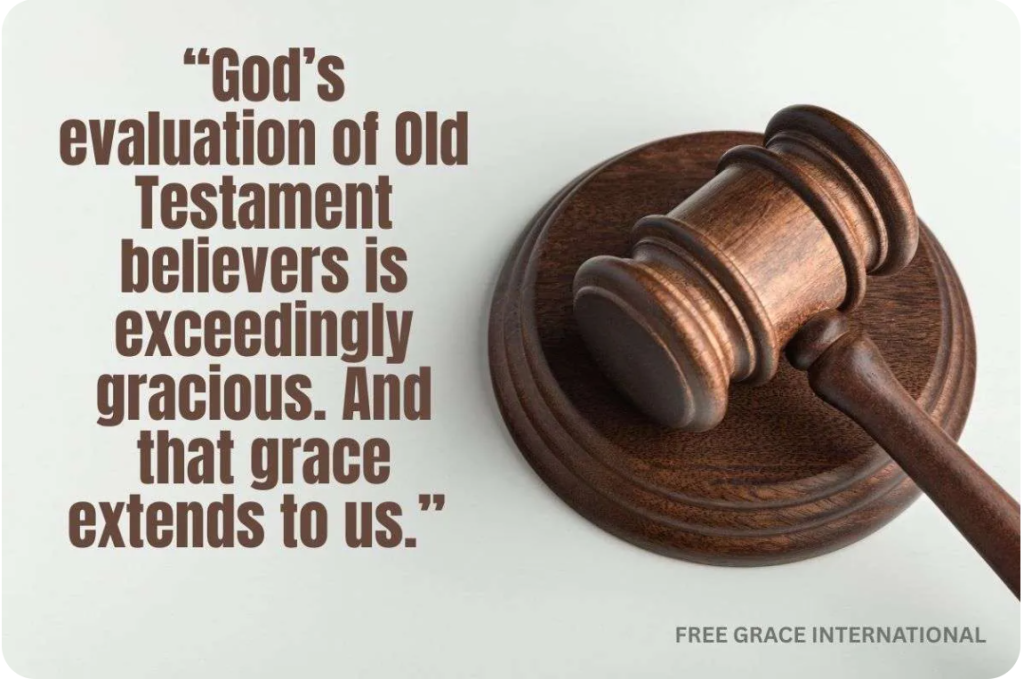
    Hebrews 11 implies a resounding “Yes!” God praises these flawed people for their faith. Because they believe God exists and rewards those who seek Him, they are commended as pleasing God (Hebrews 11:5-6). God’s evaluation of these Old Testament believers is exceedingly gracious.  And that grace extends to us. 


    This post was written for Free Grace International, and first appeared there.

  • Using our unique abilities

    Using our unique abilities

    Lately I’ve been noticing and appreciating how God made each of us different. God’s creativity really knows no bounds. DNA alone has produced billions of people who look different. And when we add in our culture, our life experiences and the stories we’ve shared, the variety is, well, infinite. And God did this on purpose.

    First Corinthians seems to me to consider this theme of “individualization” or “diversity”. For example, 1 Corinthians chapter 12 verses 4-7 talk about a variety of gifts, a variety of ministries or ways to serve and a variety of activities and accomplishments. And verse 14 talks about the many members of the body being different, and how funny it would be if the entire body was a foot, or an eye. Verse 19 asks “If all were a single member, where would the body be?” Paul finishes chapter 12 taking about how God has appointed different members of the body to different tasks – apostles, teachers, prophets, helpers, administrators and so on. I don’t think his point is that we each fit into one of these categories, but instead that God has intentionally made us unique, and uniquely equipped us to serve in just the place he put us.

    This seems like something obvious, and yet I sometimes struggle to remember it. Too often, I look at missionaries as spiritual superheroes (which, let’s be honest, they sometimes are!), and wish that their ministry was mine. I’m so impressed with their gifts, their ministry, their service to God and what God has done through them that I get jealous, or feel lesser because God hasn’t given me the same abilities and role. God didn’t make His whole body a nose. These verses remind me that it’s important for me to be a toenail if that’s what God has called me to be.

    It would be even weirder than AI if the whole body of Christ was a nose

    1 Corinthians 7:17 “Let each person lead the life that the Lord has assigned to him and to which God has called him.”

    But there’s a second theme that accompanies this theme of “God made us all different”. It’s a theme of ONE.

    According to 1 Corinthians 12:4-7, there are different gifts, different ministries and different accomplishments – but behind them is ONE Spirit, ONE Lord and ONE God. In fact, verse seven gives us ONE purpose also for the different gifts, different ministries and different accomplishments – “for the good of all“.

    The theme continues with verse 12 “just as the body is one and has many members, and all the members of the body, though many, are ONE body, so it is with Christ“.

    How do we all, as unique individuals be one body? It takes 1 Corinthians 13 – Love. if we don’t have love, we’re not acting as one body.

    “If I’m a spiritual superhero and don’t have love, I’m nothing….”

    Then 1 Corinthians 14 brings it together. Verse 1 says “Pursue love, and earnestly desire the spiritual gifts…” And verse 3 gives the reason: “speak to people for the upbringing and encouragement and consolation“. And verse 12 reiterates it: “So with yourselves, since you are eager for manifestations of the Spirit, strive to excel in building up the church.”

    Isn’t this a cool verse? It seems the Corinthians were “eager for manifestations of the Spirit”. I too am eager to see God work. I want to be a part of what He’s doing in the world. I want to use my gifts and abilities to be contribute what God is doing. And this verse tells me how to do it:

    So with yourselves, since you are eager for manifestations of the Spirit, strive to excel in building up the church”

    God gave me a unique set of gifts and abilities. He assigned me a unique DNA and a unique life, making me a tool that in the skillful carpenter’s hand is exactly the tool he wants for the job He has called me to do. (Remember 1 Corinthians 7:17? “Let each person lead the life that the Lord has assigned to him and to which God has called him.”). But He hasn’t just set me loose to figure this out on my own, He’s also told me where to put my efforts.

    I should strive to excel. What should I strive to excel in? Strive to excel in building up the church. How do I do that? Practice loving (chapter 13), practice encouragement and consolation (chapter 14 verse 3), and practice building up the church (chapter 14 verse 12). God made me unique for the purpose of making me a part of his one body, the church, and I have a job. No matter what my gifts and abilities and background and story is – my job is to be a tool that God uses to build up the church.

    May we excel in this.

  • Why Praise God?

    Why Praise God?

    Pondering Psalm 65

    Praise is due to you, O God, in Zion;

    Why is praise due to God? What has He done to deserve praise?

    O you who hear prayer,

    Aha. The first reason that praise is due to God. He hears prayer. How cool is it that God listens to us? That He wants to hear from us? That He knows us and still bothers to listen to us. He pays attention to what we tell Him. Isn’t having someone pay attention to us kind of a basic human longing? God pays attention to us. He hears our prayer.

    to you shall all flesh come

    This could be a second reason to praise God – because He allows all people to come to Him. Or it could be that because He hears prayer, all people come to Him. Which do you think?

    you atone for our transgressions

    There’s so much in the Old Testament that looks forward to Christ. The sacrifices at the temple atoned for sins temporarily and looked forward to the day when Jesus would permanently atone for the sins of all humanity. But even in this time of temporary atonement and daily sacrifices, God deserves praise because He offers atonement for our sins.

    Blessed is the one you choose and bring near, to dwell in your courts!

    How does it feel to be chosen as one who can serve (and represent) God? How did the ancient Jews feel to be God’s chosen people, and the object of God’s distinct attention? Even with their chosen status, those living in ancient Israel didn’t have the access to God that we take for granted today. Not only are we chosen to serve God with our good works (Ephesians 2:10, right?), but we also have the amazing privilege of being near to God – and dwelling or living happily there! Remember the Psalm that says “Better is one day in your courts than thousands elsewhere”? (Psalm 84:10) – it’s all about how David longs to be in God’s presence, to be near to God. We have access to that nearness to God. Jesus bought it with his blood – his atonement. Now, if we’re out of fellowship with God, we can confess our sins and He cleanses us from all unrighteousness (not just the sins we knew to confess!). Because of this we can walk in fellowship and nearness to God. This is definitely a reason to praise God.

    We shall be satisfied with the goodness of your house, the holiness of your temple!

    I think we’re continuing the theme of being near to God – His courts, His house, His temple. This house has goodness, and his temple has holiness. Because of the goodness of His house, we are satisfied. Is this a reference to God providing all our needs out of his vast stores of owning everything? I am satisfied with the goodness of God’s house. When I remember this satisfaction, the attractions of the world fade.

    By awesome deeds..

    God lets us see His awesome deeds. He didn’t have to do that – he could keep us oblivious. But He lets us see some of them, and when we’re looking for them, He lets us notice more. What good gifts from God. We can praise Him for his amazing deeds.

    You answer us with righteousness

    We’re back to God hearing our prayer – and more that hearing, paying attention and taking the time to answer us. And not just answer us, but to answer us with righteousness. God always has the right answer. He sees through all of time, and through all of us, so He has the wisdom and all the information to have the right answer.

    God of our salvation

    I’m not sure what God is saving from here. But God is in the saving business – He’s a pro. What a great reason to praise and thank Him! What has he saved you and me from today?

    the hope of all the ends of the earth and of the farthest seas

    God’s answering us does give us hope. God gives us hope. A God that brings hope to our world – He deserves praise. Hoping in God isn’t limited by location or geography. Even more praise!

    who by His strength established the mountains

    He created the mountains (and everything else). Praise Him for being The creator!

    being girded with might

    You know the old chorus “What a mighty God we serve!”? That’s another reason to praise Him.

    Who stills the roaring of the seas, the roaring of their waves, the tumult of the peoples

    Which is harder for God to make peaceful, the stormy seas or tumultuous people? God is a God that brings peace to both. “Be Still and know that I am God”. He gives us the ability to calm down and be still. And He shows Himself to be God. It gives me peace to know that God is the one in control. I don’t have to figure out this life, or everything that’s going on. I can rest in His arms and know that He’s got this. That calms the tumult in me. I praise Him for that.

    so that those who dwell at the ends of the earth are in awe at your signs.

    This seems to be to be a repeat of the ideas that He does awesome things, and that He’s not limited by geography. It doesn’t matter where I am, I can see signs of God.

    You make the going out of the morning and the evening to shout for joy

    The HCSB says “You make the east and west shout for joy”. I think it’s another reference to not being limited by geography, but it could be that creation everywhere shouts for joy. Creation inspires us to praise God. Creation itself praises God.

    You visit the earth and water it; You greatly enrich it; the river of God is full of water, You provide grain, for so you have prepared it. You water its furrows abundantly, settling its ridges, softening it with showers, and blessing its growth.

    God provides for the whole earth. He visits it, and waters it. I picture God with His watering can, encouraging spring to come along, and the sprouts of green to grow in the gentle, enriching rain. The rain soaks and softens the soil, making it better for growing. God is feeding the earth, and feeding the people of the earth.

    You crown the year with your bounty; your wagon tracks overflow with abundance. The pastures of the wilderness overflow, the hills gird themselves with joy, the meadows clothe themselves with flocks, the valleys deck themselves with grain, they shout and sing together for joy

    What are the ways that God shows up in nature? He created the mountains, He calms the roaring waves, He waters and enriches the earth, He crowns the year with bounty… and the wagon tracks, the pastures, the hills, the meadows and the valleys.

    Look at all the abundance here:

    • You visit the earth and enrich it
    • The river of God is full of water
    • You water its furrows abundantly
    • the year is crowned with bounty
    • the wagon tracks overflow
    • the pastures in the wilderness overflow
    • the hills gird themselves with joy
    • the meadows clothe themselves with flocks
    • the valleys deck themselves with grain

    Isn’t it interesting that the hills, the meadows and the valleys are all getting dressed? (and with joy, flocks and grain, respectively)

    Does this abundance theme goes all the way back to the beginning of the Psalm?

    • He hears prayer. This isn’t limited – that’s part of what makes it so amazing. His attention isn’t limited.
    • All come to Him. This Psalm doesn’t use the word Grace, but that’s what comes to mind here. God’s grace isn’t limited to a few. It’s for all.
    • He atones for our transgressions. Again, this is unlimited. All of our sins are paid for by Jesus. The atonement of this Psalm foreshadows this.
    • We are satisfied with the goodness of His house. Because it’s a house of abundance.
    • He has awesome deeds.
    • He answers us with righteousness because his wisdom isn’t limited. Because His righteousness isn’t limited. Because HE isn’t limited.
    • He’s the hope of all the earth. Not just part of it.

    they shout and sing for joy

    The earth is filled with abundance and shouting and singing for joy. Just a few verses before here, the evening and morning, or the east and west are shouting for joy too. God’s abundance isn’t limited by geography. God’s abundance isn’t limited at all! Creation itself is praising God and shouting for joy.

    This Psalm feels like spring to me. In the spring, the world overflows with the hope and abundance of God. In my yard, the daffodils are blooming and the asparagus is sprouting (and ready to harvest a few sprouts!). I can see the richness of God in the spring rains, and see nature getting dressed with beauty, praising God. I want to join them and praise God. And I have every reason to! In the HCSB, this Psalm begins with “Praise is rightfully yours, God”, and the NKJV says “Praise is awaiting You, O God”. Praise is awaiting God from the whole earth, because it’s rightfully His.

    This spring, I can join all creation in shouting for joy in praise of God.

  • Stress Wood

    Stress Wood

    In 1987, a team of scientists built the “ideal ecosystem” in Arizona.  It was fully self-contained, intended to prove how one might grow food in space. They named it Biosphere 2, and in it, the scientists created the best possible set of growing conditions. The trees they planted grew quickly – much more quickly than their counterparts in the outside world. However, well before they reached maturity or the ability to bear fruit, the trees fell over and died. When the scientists studied the wood and bark of these fallen trees they learned their mistake: a lack of wind in Biosphere 2 had denied the trees the opportunity to develop stress wood. The stress wood, true to its name, is a tree’s response to adversity – it’s denser than other wood and provides the tree with a stable and rigid base. To develop the strength and resilience to bear their weight and stand upright – thus growing to maturity –  trees need to develop stress wood. That is, they need the adversity and stress of the wind.

    In pursuit of an easy life

    I may not be living in Biosphere 2, but I have a relatively easy life. Despite this, I have often wished it was even easier. I have found it difficult to trust God, even in my little struggles. I remember being single and giving up hope for a husband, deciding that serving God alone was okay (then I met my husband – isn’t it funny how often it works that way?). I remember wrangling a bunch of active toddlers. It’s only by God’s grace I survived. I remember juggling the homeschooling of five children while working part-time to support my husband’s education. I remember eating beans and rice to make ends meet. Even today, I feel the stress of a full-time job and a full-time ministry competing with my family and God for my time.


    I sometimes (okay, often) find it difficult to choose to be kind to my husband and now teen and young adult kids. I find it hard to work out the realities of our call to show grace to my imperfectly human family, friends, and church. Trusting God through the difficult circumstances of life, even a relatively easy life like mine, is hard. But the adversity of life has a purpose. Like the trees, I cannot grow and develop into fruit-bearing maturity without adversity and stress.

    Spiritual Stress wood

    The New Testament has a word for this development of spiritual “stress wood.” It’s hupomone.  In Greek, it means “to stand up under”, and conveys the idea the carrying a heavy weight or burden. In a study of its 32 uses, I discovered that hupomone is an important element in the process of spiritual maturation.  

    Through the New Testament, hupomone is accompanied by and contributes to the development of a variety of fruits of the spirit. Paul in Romans calls it a reason to glory in our tribulations, resulting in character and hope (Romans 5:3-4 NKJV).  Timothy is encouraged to pursue righteousness, godliness, faith, patience (hupomone), and gentleness (1 Timothy 6:11 NKJV).  James tells us to count our trials as joy, because they produce patience (hupomone), which makes us mature and complete, lacking nothing (James 1:3-4 NKJV). And Peter tells us to diligently add to our faith virtue, knowledge, self-control, perseverance (hupomone), and love (2 Peter 1:5-7 NKJV).  

    If we as believers want to bear spiritual fruit such as character, hope, righteousness, godliness, faith, gentleness, completeness, and love, we must mature by learning to stand up under life’s difficult circumstances. Most of the occurrences of hupomone include a context of suffering.  Adversity is an assumed part of life, and we as believers are challenged to endure and grow through it – not with a whining attitude, but with strength coming from God that gives us resilience – allowing us to grow, bear fruit, and be rewarded.

    In addition to a context of suffering, most of the uses of hupomone also include hope – hope to bear spiritual fruit (Luke 8:15, Col 1:11), the hope of being a comfort to others (Rom 15:4-5, 2 Cor 1:6, 1 Thess 1:3), the hope of strength from God through our weakness (Rom 8:25-26), and hope of eternal reward from God (1 Thess 1:3 and 4, Hebrews 10:36, 12:1) – that all is in addition to the spiritual fruit listed above that we get to enjoy during this life. Romans 8:18 reminds us that 

     “…the sufferings of this present time are not worthy to be compared with the glory which shall be revealed in us.”

    Flourishing

    We don’t live in a suffering-free bubble, like Biosphere 2 and it wouldn’t be good for us if we did.  As we endure the hardships of each phase of life – whether it’s living for God through singleness, changing diapers, mentoring teenagers, caring for aging parents or aging ourselves – in all the adversity of life – these struggles are growing us into mature disciples.  We need them. 

    May we, like trees, grow strong and healthy as we hupomone through the trials of life, developing the resilience and maturity of a disciple who spiritually flourishes and who bears spiritual fruit.